What finished lot development actually involves
Home builders buy finished lots, not raw land. The work in between is where schedules, budgets, and returns are decided.
- Author
- Tim Ryan, Founder and Principal
- Published
- Reading time
- 6 min read
When people picture real estate development they usually picture the vertical part: framing, roofs, finishes. In a master planned community, most of the risk and much of the value sits in the horizontal work that comes first. A home builder will not start a foundation until the lot in front of it is finished: graded, drained, served by water and wastewater, reachable by a paved street, and legally platted. Delivering that lot is our core business.
Entitlements and platting
Before a shovel moves, the land has to be allowed to become a neighborhood. That means zoning or a development agreement that permits the intended density, a preliminary plat that lays out streets and lots, utility commitments from the providers who will serve the community, and often agreements with the city, county, or a utility district about who pays for what. In Central Texas this stage can take longer than construction itself, and it is where local knowledge matters most.
- Zoning, planned unit development standards, or development agreements
- Preliminary and final plats, with lot dimensions that match the builder's product
- Water, wastewater, and electric service commitments
- Drainage and floodplain studies, traffic analysis, and environmental review
Grading and earthwork
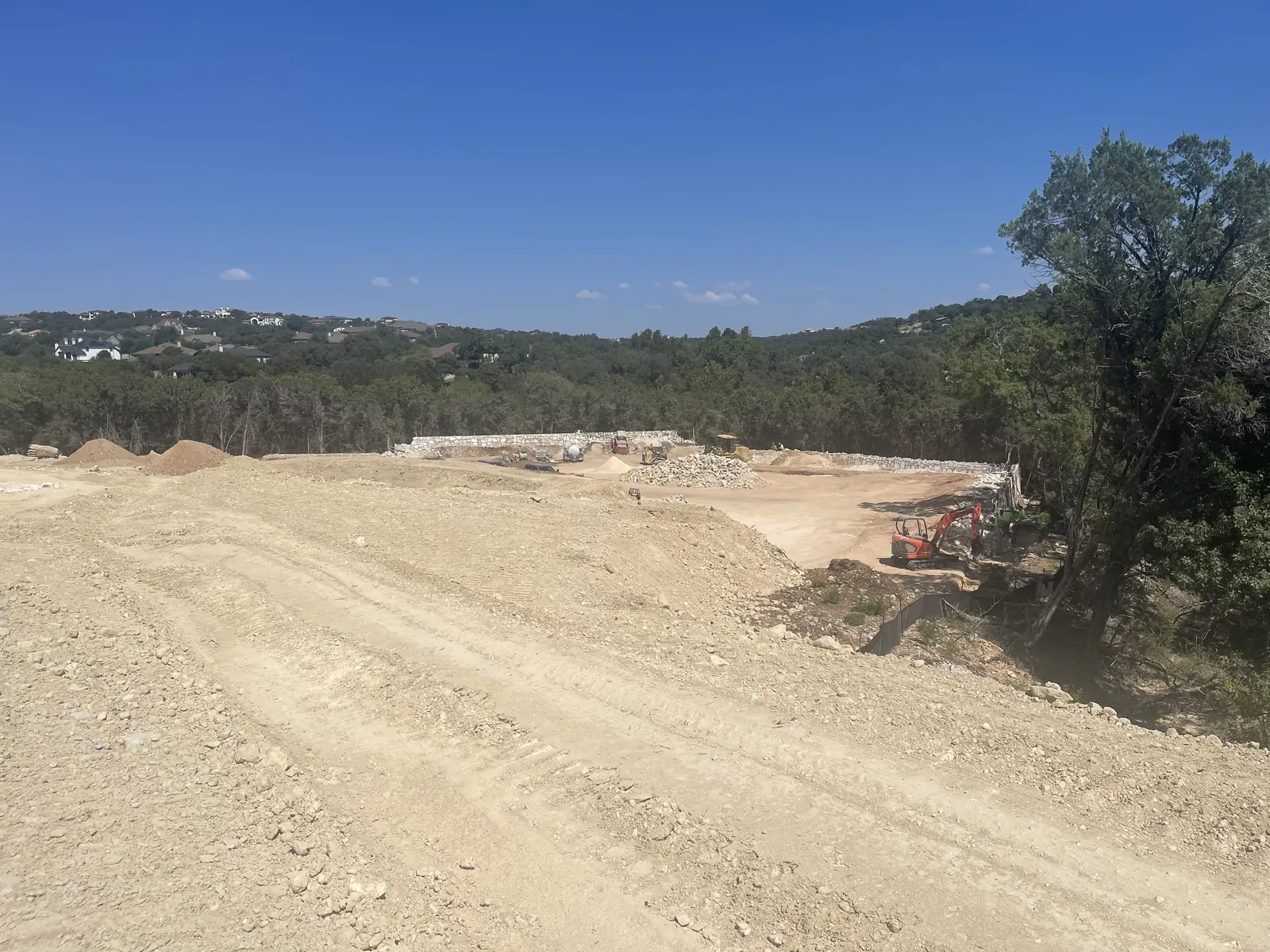
Grading reshapes the site so streets drain, lots sit at buildable elevations, and detention ponds hold stormwater where the engineer modeled it. In the Hill Country that frequently means working with and around limestone, which changes excavation costs and sequencing. Balanced earthwork, where cut and fill roughly offset on site, is one of the first budget questions we ask.
Water, wastewater, and dry utilities
Wet utilities, meaning water and sanitary sewer, go in deep and early, followed by storm drain. Dry utilities, meaning electric, gas, and telecommunications, are coordinated with the providers and typically installed after curbs are set. The order matters: a trench cut through a finished street is expensive, and a utility conflict discovered in the field can stall an entire phase.
Drainage and detention
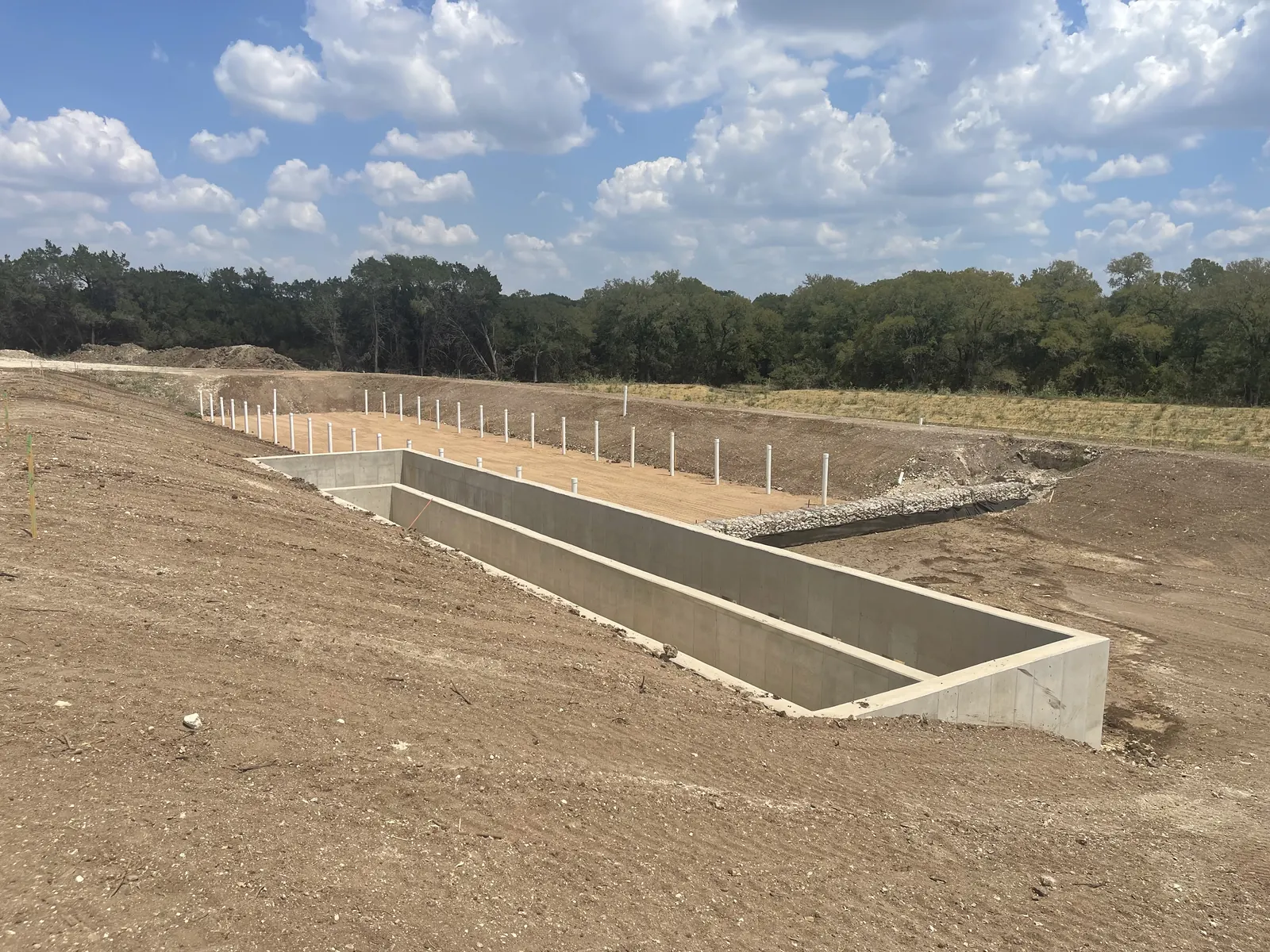
Every new impervious surface sends more water downstream faster. Detention ponds, channels, culverts, and outfall structures are designed so the developed site releases stormwater no faster than the undeveloped land did. These facilities are inspected closely by municipalities and often maintained by a homeowners association or utility district after completion, so they are built to last.
Roadways and finished lot delivery
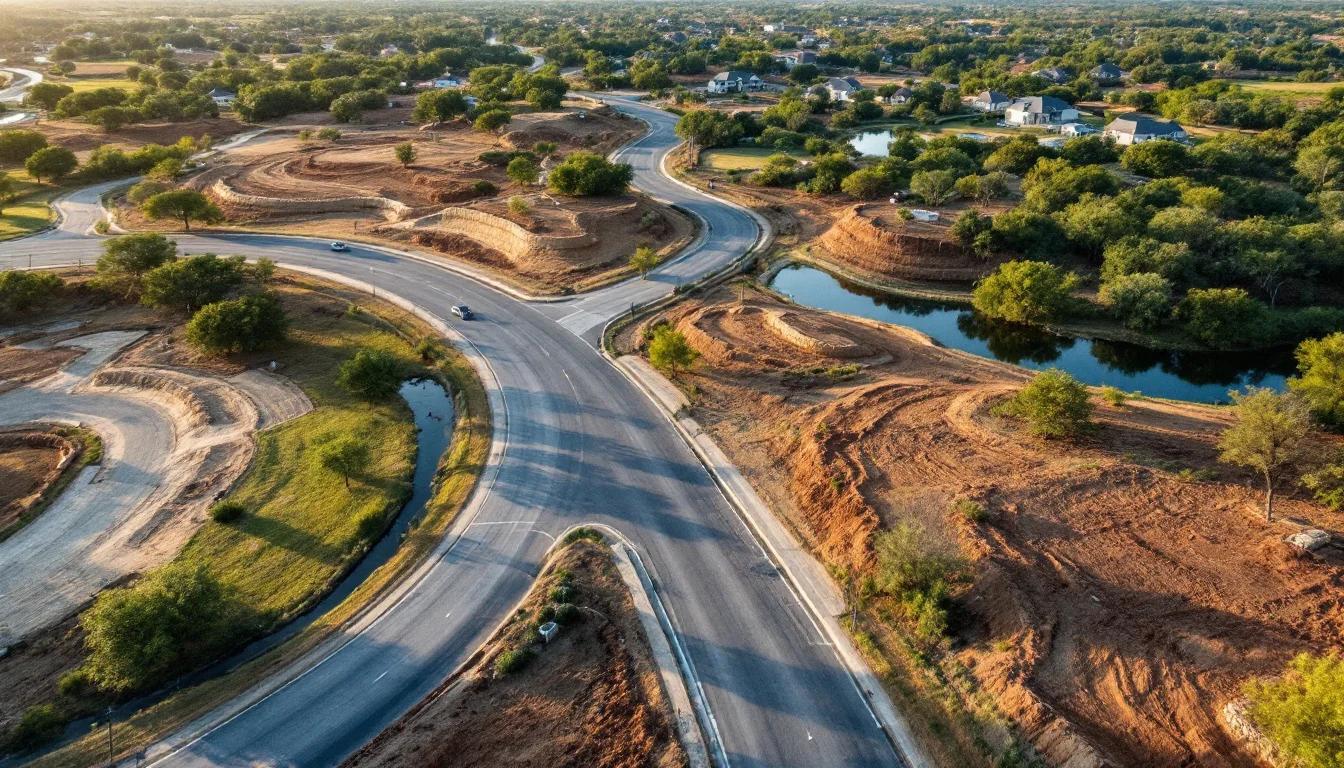
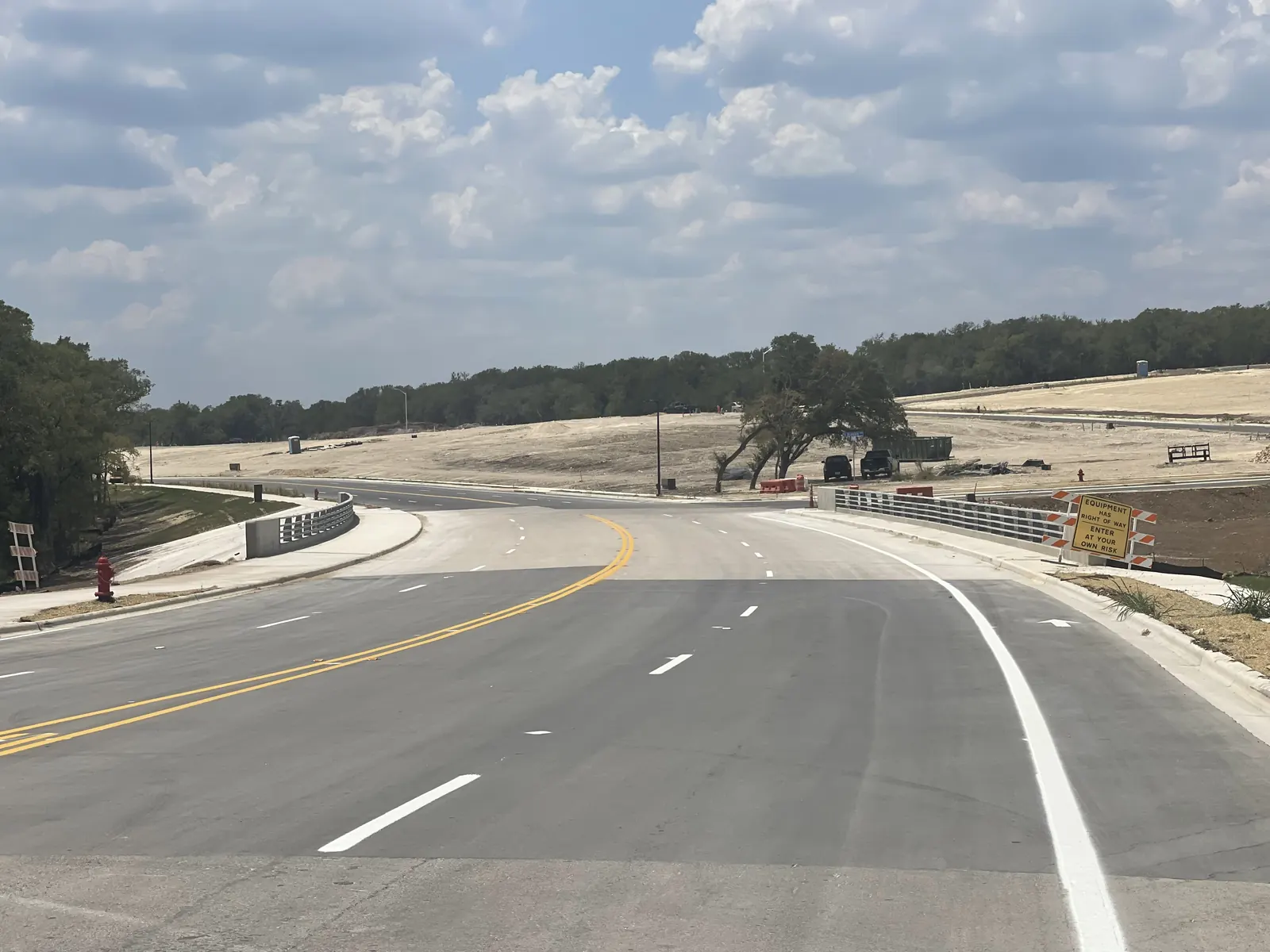
Streets are built in layers: subgrade, base, curb and gutter, then paving. Once streets are paved, sidewalks and street lights are in, utilities are tested and accepted, and the final plat is recorded, the lots are finished. The builder takes delivery according to a schedule written into the lot purchase contract, and the development pays back its capital as those takedowns close.
Before the first home is framed, the roads, utilities, and drainage have to be right. That is the work we do.
Why it matters to investors
Finished lot development has a defined scope, a defined buyer, and a defined exit. The risks are real, chiefly entitlement timing, construction cost, and builder demand, but they are knowable and manageable by a sponsor who has done the work in the field. That combination of visibility and discipline is why we focus here.